You Won the Argument. So Why Does It Feel Like You Lost?
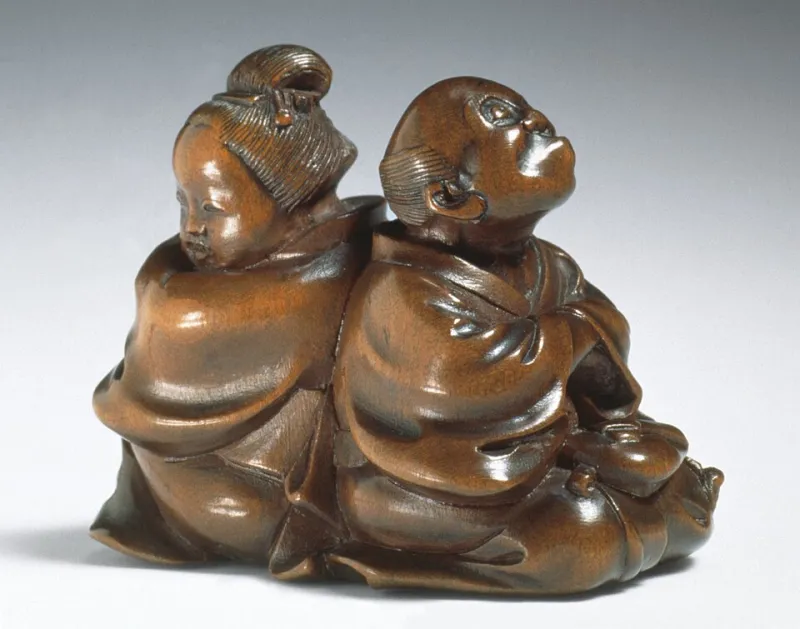
Photo: Meikeisai Hōjitsu (Japan, died 1872), Public domain, via Wikimedia Commons
There's a particular kind of silence that follows a won argument. You know the one. Your partner has stopped talking, the point has been scored, and the evidence is undeniable — you pulled up the text message, you remembered the date correctly, you cited the exact thing they said in March. Case closed.
And yet the room feels colder than when you started.
If you've ever walked away from a fight with a victory and a pit in your stomach, you already understand the paradox at the heart of this piece: in a relationship, winning and losing are often the same outcome. When one person takes the W, the team takes the L.
The Courtroom We Didn't Mean to Build
Nobody sets out to turn their living room into a courthouse. It happens gradually, one small "actually, that's not what happened" at a time.
Take Marcus and Dana, a couple from Columbus who've been together nine years. Dana describes their old dynamic like this: "Every argument, he'd start lining up his evidence. Screenshots, receipts, timestamps. And I'd realize I wasn't talking to my husband anymore — I was deposing a hostile witness."
Marcus, for his part, didn't see it as combat. "I thought if I could just prove I was right, the fight would be over. Like the facts would settle it." Instead, Dana started shutting down. The facts were settling it — just not the way he hoped.
This is the trap: when we treat disagreements like trials, we stop listening to understand and start listening to rebut. Psychologists sometimes call this "listener rebuttal" — the moment you stop processing what your partner is saying because your brain is busy drafting your counterargument. You're not in a conversation anymore. You're in prep for closing statements.
Why 'Being Right' Feels So Urgent
The compulsion to prove a point usually isn't about the point at all.
For a lot of us, being wrong carries a charge from way back. Maybe you grew up in a house where admitting fault meant consequences. Maybe an ex used your mistakes against you, so now every disagreement feels like a threat to your character rather than a difference of preference. When your partner says "you forgot to call the plumber," what you hear is "you are a careless person," and suddenly the stakes aren't plumbing — they're your whole identity.
There's also a subtler engine underneath: the fear that if you concede this one, you'll be conceding everything. That letting them be right about the dishwater means they'll be right about the budget, the in-laws, the big stuff. So we defend every hill like it's the last one.
But here's the thing the courtroom model never accounts for: your partner is not the opposing counsel. You're not presenting to a judge. There is no neutral third party waiting to hand you a favorable ruling. There's just the two of you, and a relationship that absorbs the cost of every battle regardless of who wins it.
Three Reframes That Actually Work
You don't have to abandon your perspective to get out of the litigation loop. You just have to change what you're trying to win.
1. Swap "what happened" for "what it was like."
Couples burn enormous energy litigating facts — who said what, who texted first, whose memory of Tuesday is accurate. But memories aren't court records; they're impressions filtered through feeling. Try this: instead of "I did NOT raise my voice," try "I know it didn't feel loud to me, but I believe you that it landed that way." You haven't surrendered the facts. You've made room for their experience alongside yours. That's not losing — that's the only version of truth that actually fits two people.
2. Ask the question you're arguing to avoid.
Most stubborn standoffs are protecting something softer underneath. Before you mount your defense, ask yourself: what am I afraid this means? Often the answer is some version of do you respect me? or am I a priority to you? — and that's the conversation worth having. "I'm not actually trying to win this, I think I'm just scared you don't take me seriously" will get you further than any exhibit.
3. Institute a mutual amnesty clause.
Some couples we've heard from swear by a simple ritual: when a disagreement starts spiraling into point-proving, either person can call it — "okay, no verdicts" — and both agree to drop the evidence for the night. Not the issue itself, just the prosecution. The tricky stuff gets revisited when you're both calmer, ideally on the same side of the table instead of opposite ends.
The Scoreboard Nobody Brags About
Here's an exercise worth trying this week. Think back over the last six months of arguments with your partner. Tally up the ones you "won." Now ask: what did each victory actually buy you? An apology? A change? Or just a partner who got a little warier about bringing things up?
For most of us, the honest answer is that being right solved the argument and quietly damaged the partnership that has to survive it. The goal of a disagreement between people who love each other was never a verdict. It was alignment. It was walking out of the room understanding each other better than when you walked in.
The next time you feel the evidence folder open in your lap, try closing it. Not because your point is weak — maybe it's airtight. But because the person across from you isn't a jury you need to persuade. They're a teammate you're trying to keep.
And in the long run, that's the only case that matters.