Hold Your Petty Grievances: Why Couples Need a Monthly Docket Review
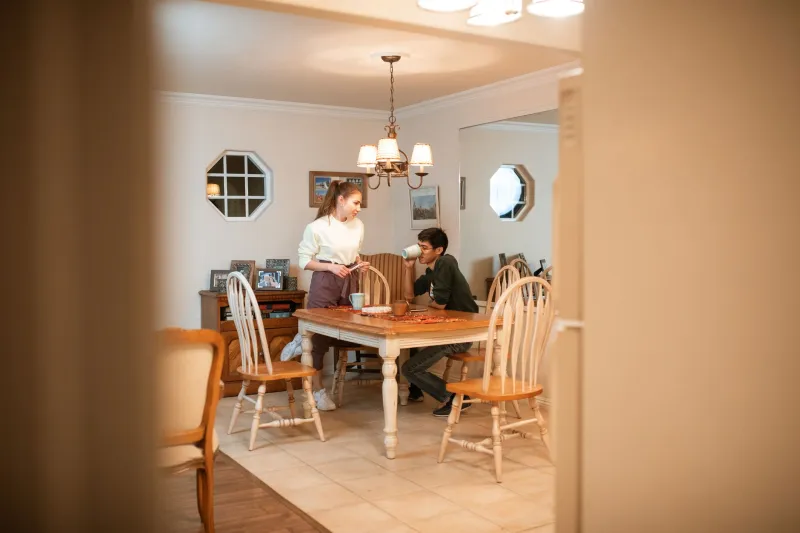
Every relationship has a backlog. Not the big, cinematic grievances — the affairs, the lies, the dealbreakers — but the small stuff that piles up in the corner of your shared life like unopened mail. The wet towel on the bed. The way they're consistently fifteen minutes late to everything, including your own birthday dinner. The dishes. God, the dishes.
Most of us handle these one of two ways: we nitpick, or we swallow. Both fail. Nitpicking turns you into a hall monitor nobody wants to date. Swallowing turns you into a pressure cooker with a smile. There's a third option, and it's borrowed straight from the courthouse: the docket review.
What Is a Docket Review?
In legal terms, a docket is the schedule of cases a court will hear. In relationship terms, it's a standing, low-stakes appointment — once a month, twenty minutes, coffee or wine optional — where you and your partner air the small stuff on purpose, before it ferments.
The magic is in the framing. When your partner says "we need to talk," your nervous system hears subpoena. But a scheduled, agreed-upon session where both of you bring items? That's not an ambush. That's due process.
Think of it like this: you wouldn't let a parking ticket sit for two years and then act shocked when your car gets booted. But that's exactly what we do with petty grievances. We let them compound. The mug left in the sink in March becomes the "you never consider me" argument in June, and by then, nobody remembers what the original charge even was.
The Ground Rules of Heart Court
Every functioning court has procedure, and so should yours. Here's the framework:
1. Small claims only. If it's a genuine dealbreaker — values, fidelity, the future — it doesn't belong on this docket. It deserves its own hearing, promptly, with both parties fully present. The docket review is for the petty stuff precisely because it's petty. That's the point.
2. One plaintiff at a time. When it's your turn, you file your claim. Your partner doesn't counter-sue mid-sentence. "Oh yeah? Well, YOU always—" is the fastest way to turn mediation into a brawl.
3. Describe the act, not the character. "The trash sat by the door for three days" is a claim. "You're lazy" is a verdict. Courts don't let you convict someone of being a bad person; neither should you.
4. Assume good faith on first offense. Most small grievances are negligence, not malice. Your partner isn't leaving socks on the floor as a statement about their love for you. They're just... not seeing the socks. Clarifying intent defuses about 80% of these disputes before they start.
5. Settlement over verdict. The goal isn't winning. It's a workable arrangement. Maybe the answer is a chore chart (unglamorous but effective). Maybe it's "I'll stop scheduling us back-to-back if you stop being late to the airport." Compromise is the whole profession.
Why the Little Stuff Matters More Than You Think
Relationship researchers have a phrase for the slow accumulation of small resentments: negative sentiment override. Once enough petty grievances pile up unaddressed, you start interpreting even your partner's neutral actions through a hostile lens. A sigh becomes contempt. A forgotten errand becomes proof of a pattern.
The docket review is preventative maintenance. It's the oil change of a relationship — boring, cheap, and infinitely preferable to the engine failure.
There's also something quietly intimate about it. You're telling each other, month after month: I care enough about this relationship to maintain it. Not just when something's on fire. Habitually. That's the difference between a couple that survives a rough patch and one that discovers the rough patch has been quietly growing for a year.
What Happens When Someone Gets Defensive
It'll happen. You'll raise the lateness thing gently, and your partner will hear "I don't love you anymore." Take a breath and clarify jurisdiction: "This isn't a big case. This is small claims. I'm not leaving — I just don't want to be annoyed about a clock." Naming the stakes lowers them, which is the opposite of what most of us do in conflict.
And when you're the defendant? Your only job is to hear the whole claim before responding. No cross-examining, no "but you did it in 2021." Just: hear it, acknowledge it, propose a fix. "You're right, I've been running late a lot. Let me set my alarms fifteen minutes earlier." Case closed. Court adjourned.
Start This Month
Pick a recurring slot — first Sunday of the month, or the last Friday. Set a timer so it doesn't sprawl. Begin with something easy to practice the format ("the thermostat war of last week") before graduating to anything tender.
The couples who last aren't the ones who never fight. They're the ones who never let the small stuff go unspoken long enough to become the big stuff. File early. Settle often. And for the love of everything, rinse the mug.